

The Cost of Home Charging
How much does it cost to charge your car at home?
Article Published: Monday 24th August 2026
How much does it cost to charge an electric car at home?
By Leah Cheeseman, Operations Manager, VCHRGD
This article was originally produced for our partners at So Energy
Thinking about making the switch to an electric vehicle? One of the first questions many drivers ask is the obvious one: how much does it actually cost to charge an EV at home?
The good news is that charging at home is usually far cheaper than most people expect. At current UK electricity prices, fully charging an EV at home typically costs between £10 and £26 on a standard tariff, depending on battery size. The same charge could cost as little as £3 to £8 when using So Energy's So EV tariff and charging overnight. Take that a step further and install a smart charger that automatically schedules charging in off-peak times, and you’re very quickly looking at substantial savings.
How much does it cost to charge an EV at home?
The exact cost depends on your vehicle's battery size and the electricity tariff you're using.
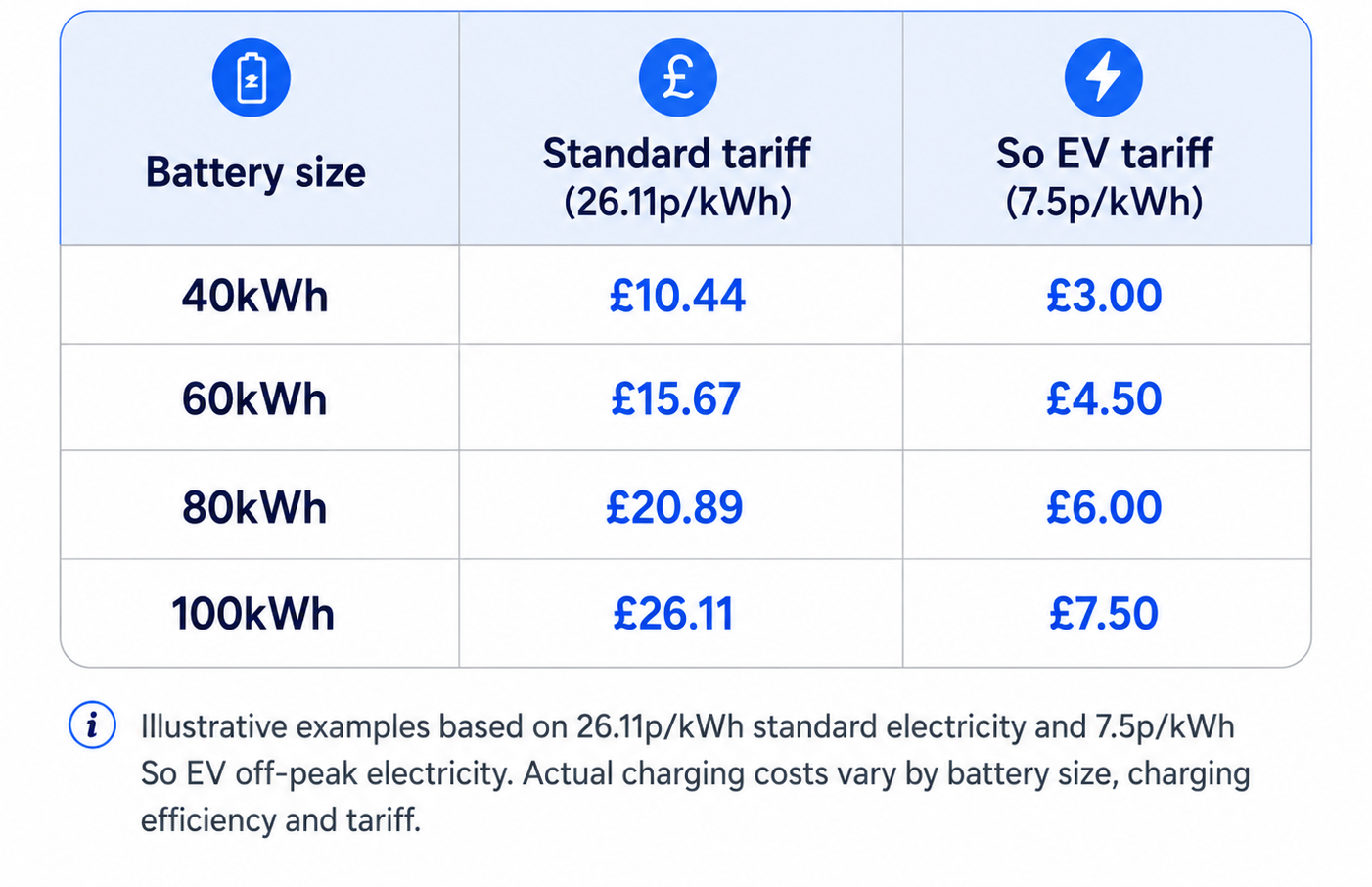
Most EV drivers rarely charge from completely empty to 100%. In reality, you're more likely to top up throughout the week, making day-to-day charging costs even lower.

What affects the cost of charging an EV?
Several factors are in-play here.
Your electricity tariff
This is the biggest factor by far.
If you're charging on a standard household tariff, you'll pay the same rate regardless of when you charge. With specific EV tariffs, the big win is the ability to access cheaper overnight electricity, taking advantage of lower grid demand.
Battery size
Just like a larger fuel tank costs more to fill, a larger EV battery requires more electricity.
A compact EV may have a battery around 40kWh, while larger family SUVs can exceed 80kWh.
Charging habits
Most EV owners don't wait until the battery is empty. Regular top-ups are often more convenient and help spread charging costs across the month.

How much does it cost to charge an EV at home?
Being able to charge at home is a massive advantage for most EV owners, from both cost and ease perspectives.
Let's use a typical 60kWh battery as an example.
Based on the current Ofgem electricity price cap of 26.11p/kWh, a full charge would cost around £15.67.
Charge that same vehicle overnight on So Energy's So EV tariff, with its 7.5p/kWh off-peak rate, and the cost falls to around £4.50.
That's a saving of around 71% every time you charge.
For a driver covering 10,000 miles per year, that difference could amount to around £490 in annual charging cost savings, simply by shifting charging into the overnight window.
While public charging remains essential for longer journeys, home charging is where most EV drivers unlock the greatest savings. Charging overnight on a dedicated EV tariff can reduce running costs to less than 2p per mile, while rapid public charging can cost more than ten times as much for the same distance.
Five ways to reduce your EV charging costs
1. Switch to a dedicated EV tariff
For most drivers, this is the single biggest opportunity to save money.
To put that into context, a typical 60kWh EV could cost around £15.67 to fully charge on a standard tariff but only £4.50 on So Energy's So EV tariff when charged overnight.
2. Use a smart charger
A tariff alone isn't enough. A smart charger helps ensure your vehicle charges during the cheapest available periods without requiring manual intervention.
3. Make sure you have a smart meter
Most time-of-use tariffs require a smart meter so your energy supplier can accurately measure when electricity is being used and apply the correct off-peak rates.
4. Drive efficiently
Smooth acceleration, sensible speeds and effective use of regenerative braking can all improve efficiency and reduce energy consumption.
5. Plan public charging carefully
When charging away from home, destination chargers and supermarket charging locations can often provide better value than motorway rapid chargers.
Charging your EV with So Energy
If you're starting your EV journey, the combination of a smart home charger and a dedicated EV tariff can make a significant difference to your running costs.
So Energy customers can benefit from EV-specific tariffs designed to reward overnight charging, helping reduce the cost of running an electric vehicle.
Pairing this with a VCHRGD charger adds another layer of convenience. Smart scheduling, solar compatibility and app control help drivers make the most of, and futureproof, their home energy setup.
And that’s before VCHRGD’s true USP kicks in, its reputation for reliability and support. The company points to a lifetime return rate of less than 1% (ie how often a charger needs to be sent back with a problem) and has worked incredibly hard to deliver high customer satisfaction ratings, with 97% of customer reviews rated five stars.
For drivers taking their first steps into EV ownership, that combination of affordability, simplicity and support can make the transition much easier.
Frequently Asked Questions
Last reviewed: 1st July 2026
Cost examples are based on the Ofgem energy price cap electricity rate of 26.11p/kWh and So Energy's published So EV off-peak rate of 7.5p/kWh. Public charging comparisons are based on typical UK rapid charging rates. Actual charging costs will vary depending on vehicle efficiency, charging behaviour and tariff selected.
-
For most UK drivers, a full charge costs between £10 and £26 on a standard tariff, depending on battery size. Charging overnight on an EV tariff can reduce that cost to as little as £3 to £8.
-
Yes. Home charging, especially when using a dedicated EV tariff, is usually significantly cheaper and much more convenient than public charging.
-
With a 7kW home charger you’ll be at full charge typically 6-10 hours, depending on battery size and starting charge level.
-
Smart meters allow energy suppliers to measure electricity use during specific time periods and apply lower overnight rates.
-
In the overwhelming majority of cases, it’s charging at home overnight using an EV tariff and a smart charger during lower-cost periods.
-
Absolutely. However, drivers who regularly charge at home can often make meaningful savings by moving to an EV-specific tariff and using smart charging features.